Human in the Loop
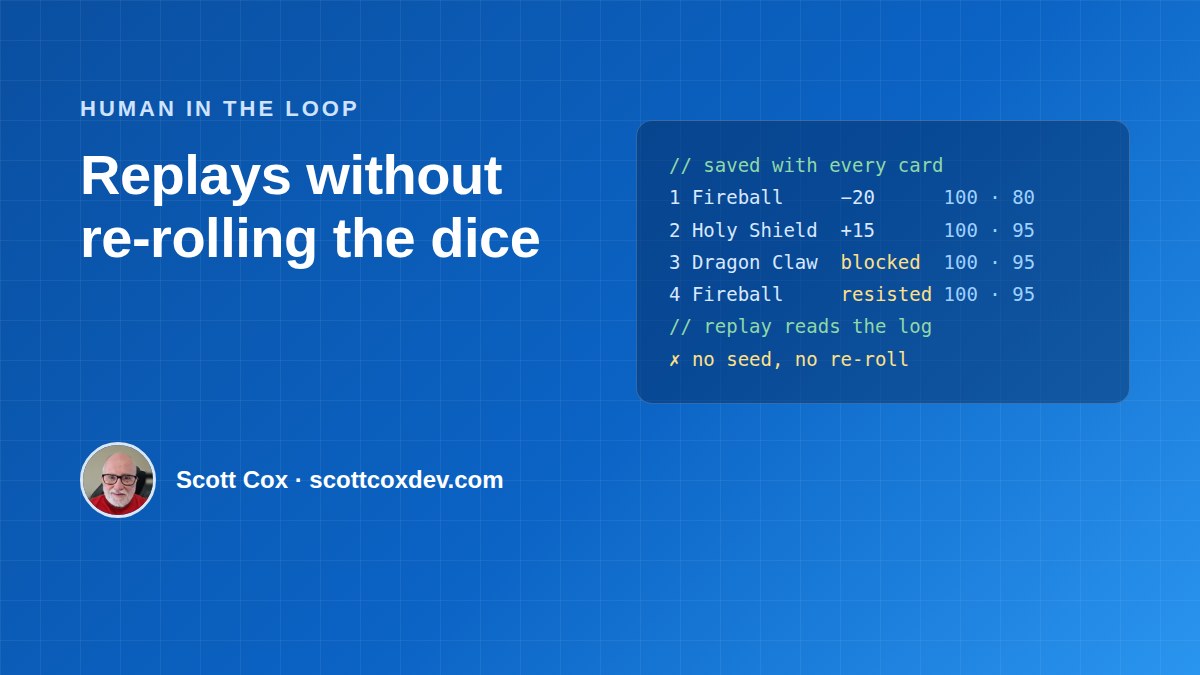
Replays without re-rolling the dice
My card game now lets anyone watch a finished duel again, card by card. The interesting decision was what to save: the random seed, or what actually happened.
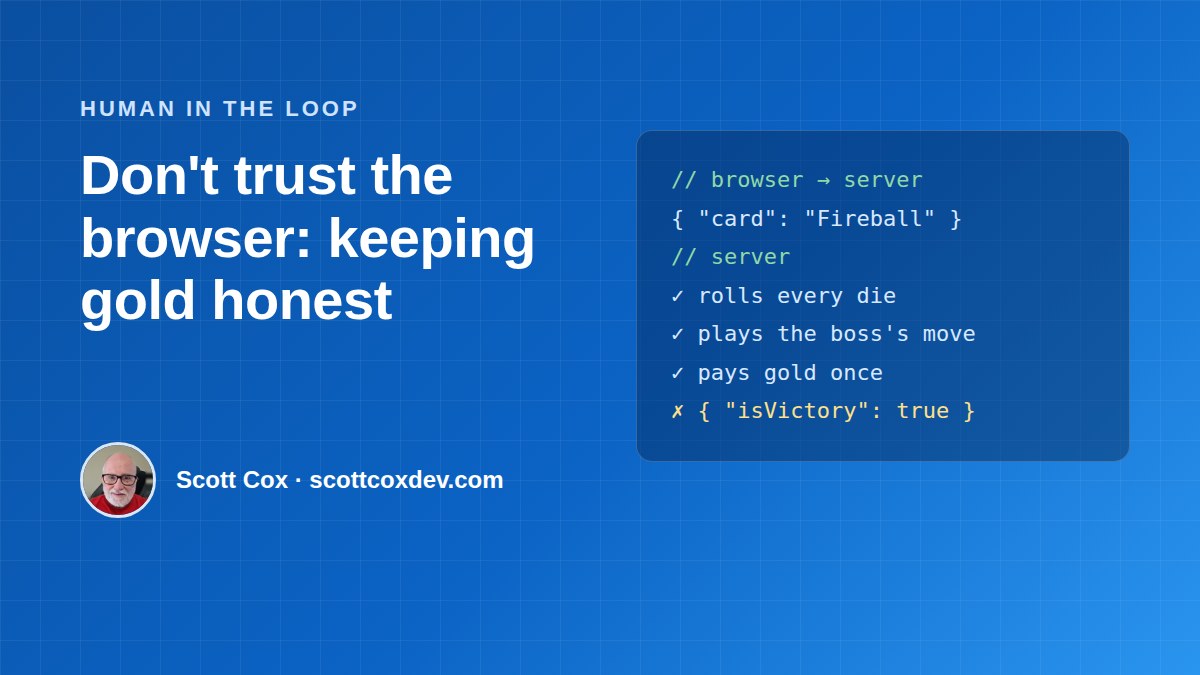
Read the post →Don't trust the browser: keeping gold honest in my game
Anyone can open the developer tools, so my card game's server plays every battle, two tabs can't spend the same gold, and every new feature has to answer one question first: how would someone farm this?
Read the post →Accounts done properly, and the gap I missed
Two-factor sign-in, one-click guest play, a real "delete my data" button and password reset by email, plus the moment I noticed the reset feature worked perfectly and almost nobody could use it.
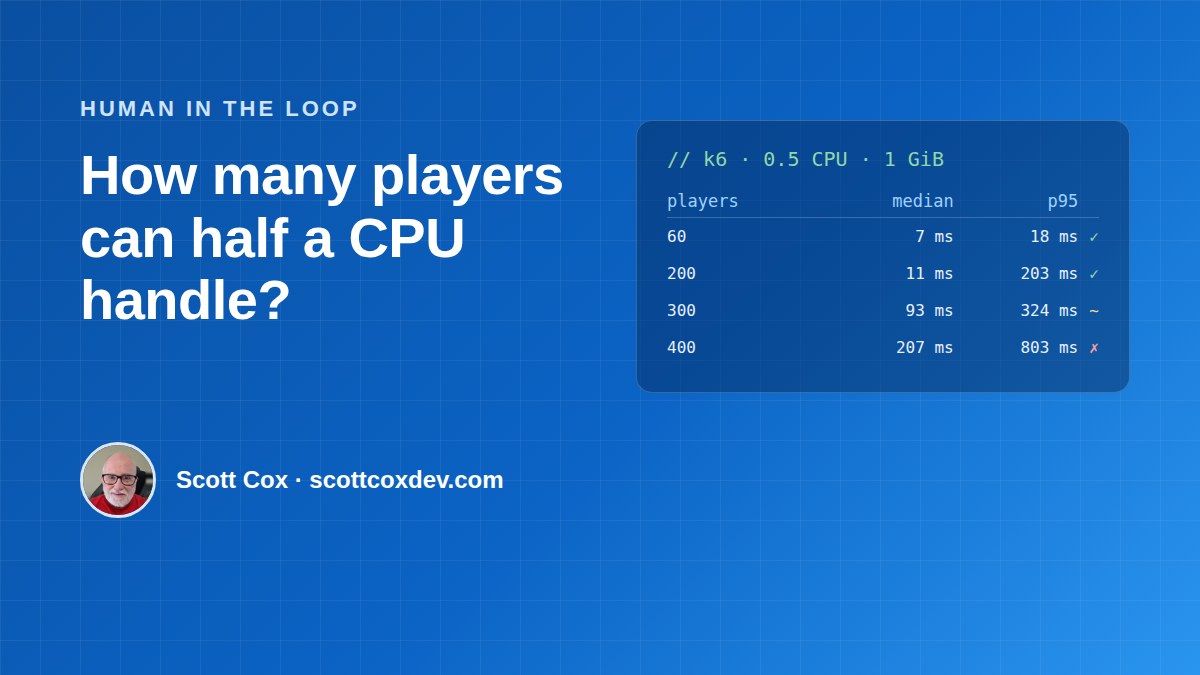
Read the post →How many players can half a CPU handle? Load testing my game
I load-tested my card game on a container the same size as production, found where it bends and where it breaks, then made it scale out without paying for a single extra service.
Read the post →Every merge ships: how my game deploys without breaking
Staging first, blue-green releases, one-click rollback and a backup I actually restore every month, plus the two times the pipeline told me something was wrong and I almost didn't listen.
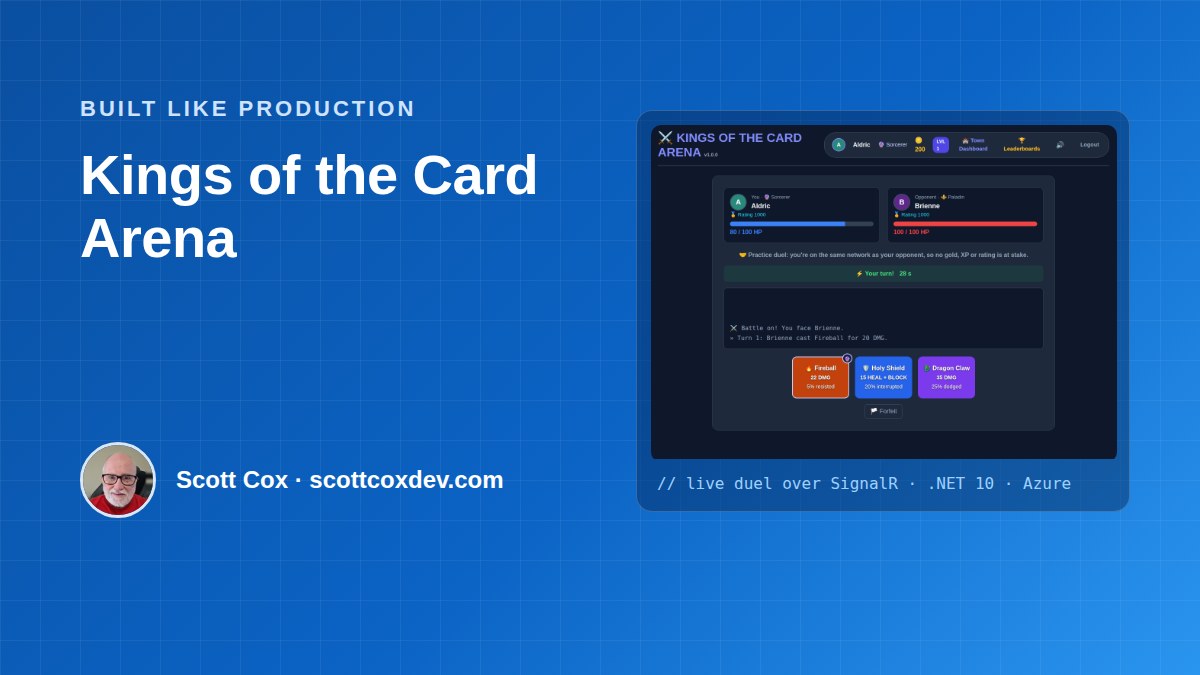
Read the post →Kings of the Card Arena, built like a production service
How a small card game became a live, tested, scale-to-zero .NET and Azure service, the bugs that only showed up in the real world, and what I learned about reviewing an AI's work.
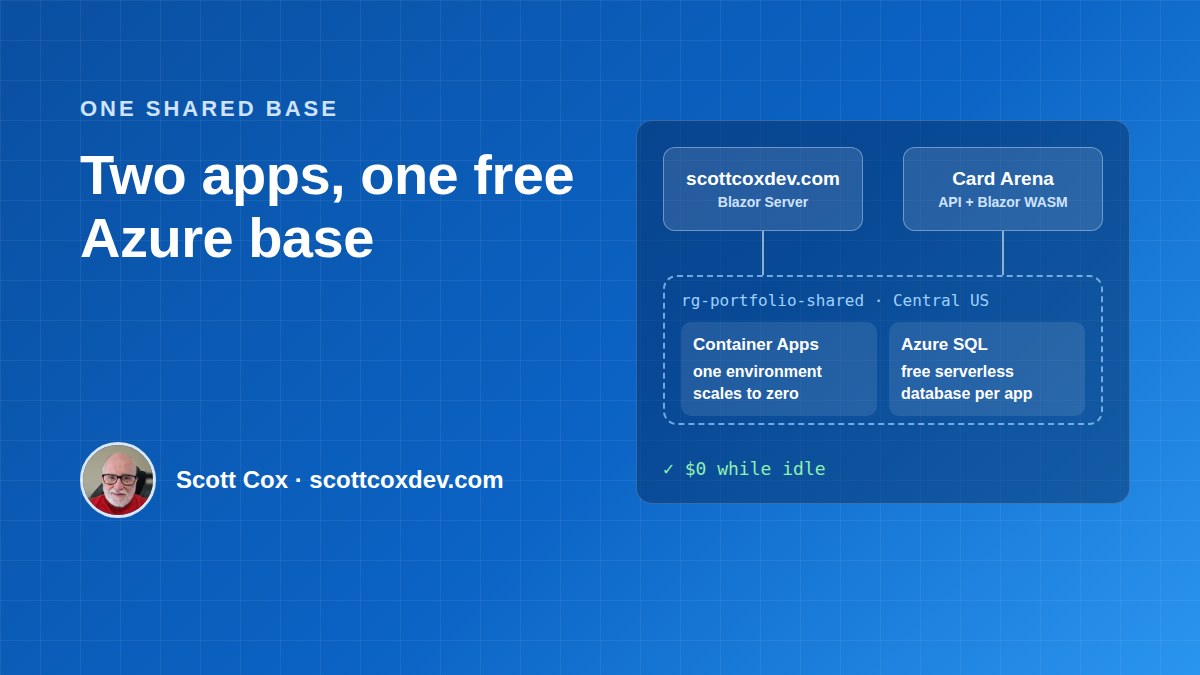
Read the post →Two apps, one free Azure base
How I moved my game and this site onto one shared Azure setup that costs nothing while idle, the outage I caused along the way, and what I'd do differently.
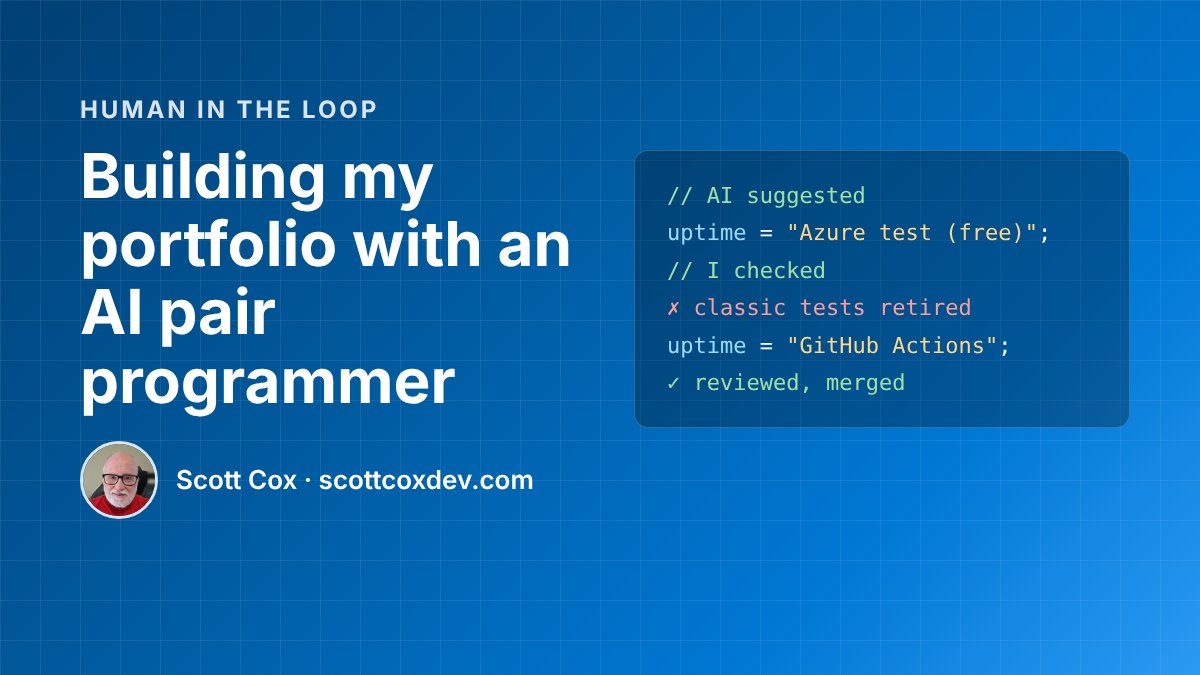
Read the post →Building my portfolio with an AI pair programmer
What I shipped this week with Claude Code, the mistakes it made, and why reviewing every change is still my job.
Read the post →